People

|
Bonan Zhao Principal Investigator (Webpage) |

|
Max Taylor-Davies PDRA (Webpage) I am interested in the computational basis of social cognition: how do people represent, learn from, and work with one another? And how do we do so flexibly despite limited mental resources? These days, my focus is mainly on using theoretical and agent-based models to test ideas about cultural evolution, cooperation, and their interaction. |

|
Ahmed Khan PhD Student (Webpage) What is the relationship between agenthood and selfhood? I am interested in studying this question using the formalism of reinforcement learning: To understand why and when it is useful for artificial, reward-maximising agents to reason about and refer to their self, and how they might do so in practice. |
|
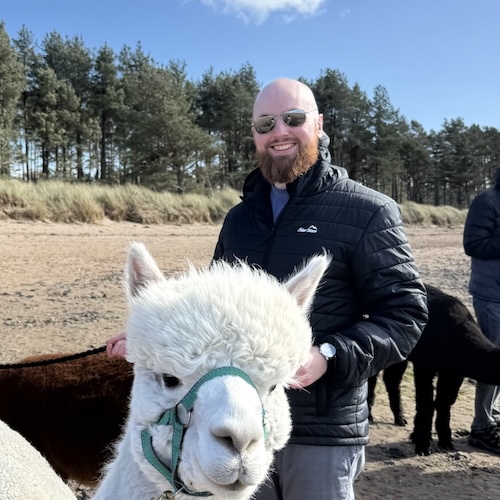
Thomas Jackson PhD Student My interests lie at the intersection between cognitive science and artificial intelligence research. I am particularly interested in the powerful Bayesian paradigm in computational cognitive science, and in exploring whether it is truly Bayesian in the first place. |

|
Wenjia Tan PhD Student I study reasoning and interaction in human and artificial intelligence. I also explore how LLM-based agents can put these abilities to work in healthcare and education, because even the smallest token can change the course of the future. |

|
Pinzhe (Zach) Zhao Undergraduate Student (Webpage) I am interested in using computational models to reverse engineer the information-processing algorithms of human thought. |

|
Wanyang (Cecelia) Yu Visiting Undergraduate Student (Webpage) What happens when humans interact with tools? I want to build apparatus to observe, predict and interpret that process, while pushing cognitive science to the wild world and seek inspiration for more human-centred AI. |

|
Zhangyekun (Kun) Li Undergraduate Student My overarching curiosity surrounds how information is represented and processed in both brains and artificial systems to drive problem-solving and creativity. Specifically, I wonder to what extent human thought has a formal structure, and whether we can capture it using computational tools like Bayesian cognitive models. |